
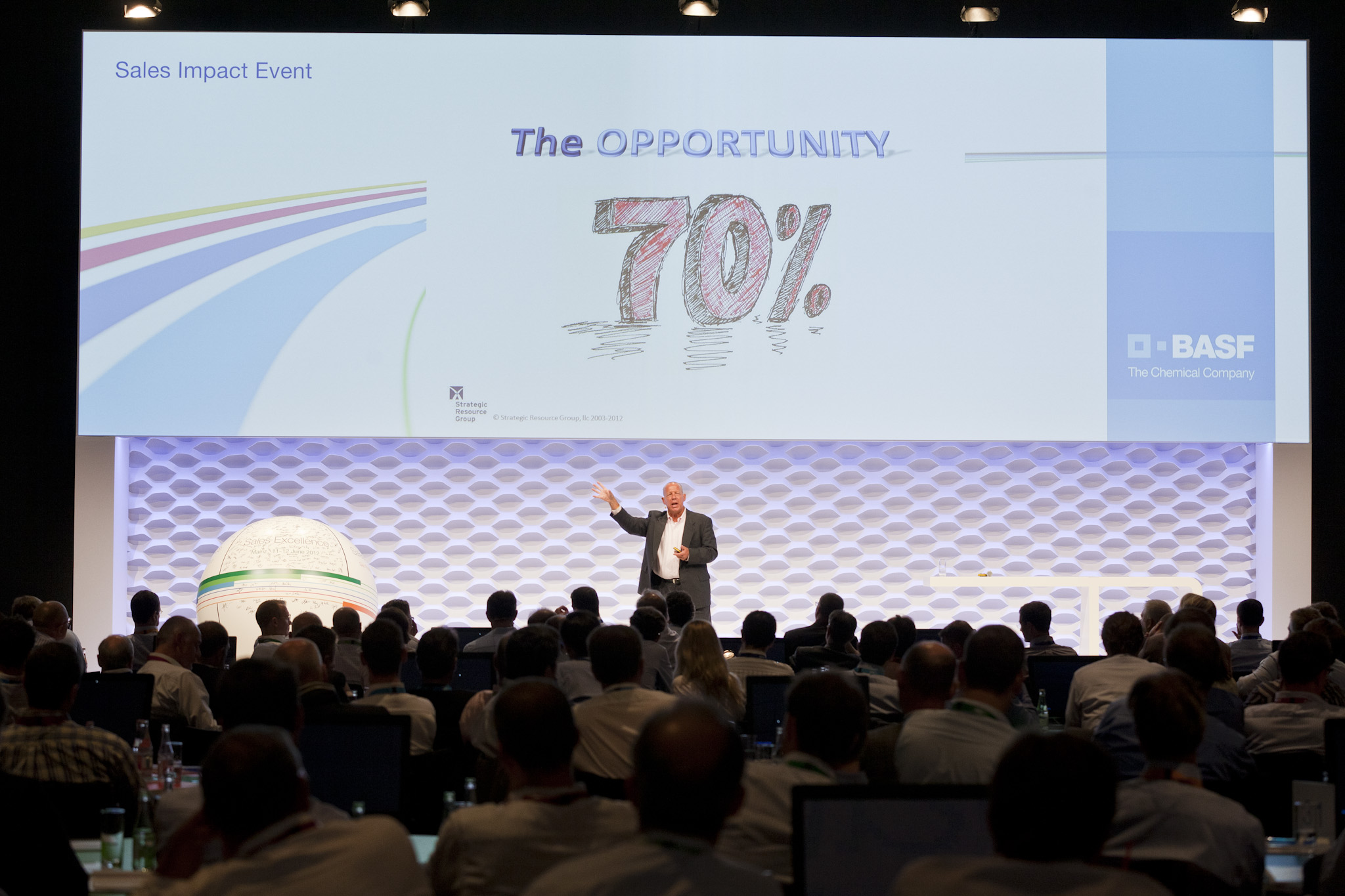
 The old sales mantra is “when you close a big deal, leverage the momentum and get another one.” Although it is good advice, I have always been one to savor the moment and celebrate a little bit. I cannot appreciate crossing the finish line if I have to start training right away. I have always enjoyed and reflected for a moment before getting busy — until now!
Last week I enjoyed one of my more significant professional accomplishments. I was the inspirational keynote at a sales conference for BASF in Mainz, Germany. BASF is the largest chemical company in the world. They invited me to speak before 300 sales professionals, board members, and executives at their biggest sales event in 2012. I was honored and humbled. I was also selected and invited.
BASF searched in Europe for a “motivational sales speaker.” They could find motivational speakers and sales speakers, but they did not find a motivational sales speaker. Frustrated with a lack of great choices, they took to YouTube and found me. After a couple of brief conversations, I was invited to be their keynote.
 Six weeks later I am on a plane to Frankfurt, Germany prepared to give one of the biggest talks of my life. I have presented to larger groups. I have presented on this topic before. This time it was different.
This was a significant event for BASF. It was up to me to inspire the participants to be excited and engaged about the strategic initiatives they were learning about. I was responsible for their perceptions and mindset when they left the event that day. And, I was the only outsider they would hear from. This was both a great honor and an incredible responsibility.
I knocked the presentation out of the park. The talk went great. Among other positive comments and accolades, the senior executive responsible for my participation acknowledged that “the final part of your speech motivated the audience very much.” My assignment was to motivate the sales organization – mission accomplished!
As I bask in the glow of accomplishment and reflect on an incredible trip, I must keep this momentum going. For the first time in my professional career, I am not interested in enjoying the celebration for long. I realized an incredible accomplishment in response to a very impressive opportunity. I want more. Now, I want to do it again. As another sales adage goes, “you are only as good as your next order.” I am working on it!!
Congratulations
Your first AWS Elastic Beanstalk Node.js application is now running on your own dedicated environment in the AWS Cloud
This environment is launched with Elastic Beanstalk Node.js Platform
What’s Next?
- AWS Elastic Beanstalk overview
- AWS Elastic Beanstalk concepts
- Deploy an Express Application to AWS Elastic Beanstalk
- Deploy an Express Application with Amazon ElastiCache to AWS Elastic Beanstalk
- Deploy a Geddy Application with Amazon ElastiCache to AWS Elastic Beanstalk
- Customizing and Configuring a Node.js Container
- Working with Logs
 If you believe that the best process for improving your sales results is to lure your competitor’s salespeople you are in for a painful lesson. It is much like free agency in professional sports. Very few free agents ever live up to the hype of expectations — they don’t have to.